

#24 Maybe the tutorial was the friends we made along the way
In loving memory of Microsoft Encarta (1993-2009)

Hiiiiiiiiii! I’ll make this intro quick because you’re in for a new episode of Our Brain versus The Internet. I’m making a suggestion, and at the same time, I’m not. You’ll understand why soon enough.
xoxo Esther 💋
PS: you know you want to share Oblique Forecasting with your hottest friends so we can all be in this little club together:
Esther’s Buy/Sell List:
💸 What I’m divesting from
🦥Learning on easy mode. Raise your hand if your math teacher kept telling you you wouldn’t carry a calculator in your pocket for the rest of your life as a justification for learning long division. Well, the joke’s on math teachers everywhere because we do carry not only a mini calculator but a credit-card-sized computer everywhere. The joke’s also on me because they’d be appalled at some of the calculations I now require the calc app for.
The 2000s
My mother and I historically don’t see eye to eye on a lot of subjects such as tattoos and the amount of olive oil required in dishes. In retrospect, some of the stern advice proves her right, however. I distinctly remember her disapproving of my choice of teen magazine (Jeune & Jolie, the French answer to Seventeen) because of its “prescriptive tone.” Instead of offering options regarding eyeshadow placement or dating rules, the magazine editors instead had strict dos and don’ts.
Something to point out here: more than any other culture I know, the French put a strong emphasis on thinking for oneself1. Being a teenager is complicated enough since it’s kind of your first rodeo and you’re figuring out how to exist in the world. Add to that conflicting directions between thinking for yourself and trying to find a how-to.
The business of dos and don’ts wasn’t by any means new, this 1938 women’s magazine is proof:
Interestingly, we millennials came of age at a pivotal moment for this too. Print magazines, as well as broadcast television and radio, were the standard forms of media we consumed.
Most fashion/beauty/health advice whether it was geared towards adults, teenagers or even kids was written by qualified(ish) adults. So were cultural commentary, music and film reviews, book selections, etc. Finding references and how-tos not entrenched in current trends was a little harder.
I had Internet access which is why I knew who they were, but wanting to emulate Debbie Harry of Blondie or Courtney Love instead of whatever look was going on at the time required something unthinkable today—reverse engineering. You’d have to pause the low-res videos, get a good look and try to recreate the look with whatever makeup and vintage clothes you had access to.

In the same vein, you’d learn guitar riffs by replaying a CD over and over. Coding your MySpace layout in HTML or creating Sims skins by going into the folders was trial and error.
You don’t get points if you only provide the answer to a math problem. The reasoning behind the answer is as important as the result. You need to understand why to know how to get to your end result.
*
The 2010s
YouTube became the go-to video-sharing platform. If you want to learn how to do anything—contour your face, change a tyre, bake a soufflé—there’s a video for that. And not just one video, but dozens, each breaking down the task into simple, digestible steps, whatever your level may be. Also notable: advice could come from your peers.
Google Maps also changed the way we navigate. You now no longer have to memorise routes or use landmarks to orient yourself. You simply follow the blue dot. Do you sometimes chastise yourself for looking up a place you’ve been to multiple times, despite not being directionally challenged? I know I do :)
The 2010s marked a turning point where we no longer needed to retain knowledge as much as we needed to know where to find it. The friction that once forced us to experiment, fail, and troubleshoot was disappearing. Learning became more about executing than understanding. We can do more things, but do we really know why they work?2
*
The 2020s
Enter AI. If the 2010s made learning easier, the 2020s made thinking itself optional.
Why bother writing an email when ChatGPT can draft it for you? Why struggle through a problem when AI can instantly generate the answer? Need a meal plan? A caption? A legal template? There’s an algorithm for that. 93% of Gen Zers use two or more AI tools a week.
At an AI breakfast I attended just before the Paris AI Summit, someone noted that ChatGPT and similar tools have already started reshaping the workplace. Consulting firms like Deloitte once relied on interns and junior employees for research—now, much of that work is done with LLMs. While more efficient, it means interns no longer gain essential research experience. In past industrial revolutions, automation primarily displaced blue-collar jobs; this time, we’re already seeing results in white-collar roles.
What happens when we let machines do the thinking for us? Problem-solving, creativity, and even critical thinking—the very muscles that made us adaptable—begin to atrophy. It’s no longer just about knowing where to find information; now, we don’t even need to process it ourselves.
We’re standing at the edge of a shift. Just like my mother warned me about prescriptive teen magazines, we now face an era where AI’s convenience may come at the cost of independent thought. If previous generations had to fight to access information, our challenge is to retain the ability to think critically in a world where everything is handed to us on a silver platter.
*
When to Make Learning Harder
As a copywriter in advertising, I was taught to make things obvious to the reader—to spell things out, to avoid making them think too hard. Is that always the best approach though?
Sometimes, making people work for information strengthens their understanding and retention. If you want to truly learn a skill, struggling through the process helps you internalise it. The trial and error of coding a MySpace layout or replaying a song to learn its chords force a deeper connection than simply following step-by-step instructions. The same goes for critical thinking—if we always accept the first answer Google or AI gives us, we stop questioning, analyzing, and understanding.
There are times when clarity and ease should take precedence. In digital advertising, for example, users need to grasp a message instantly—there’s no room for unnecessary complexity. A navigation app should be seamless, not a puzzle.
In other spaces, a little friction can be a good thing. Learning apps like Duolingo (RIP Duo the Owl) intentionally challenge users to reinforce knowledge. Media platforms that value deep engagement can afford to make their audiences think rather than spoon-feed them.
Convenience is a gift, but friction is a teacher. Sometimes, the hard way is the better way.
Esther’s Dealsheet:
📈 Bullish news
The Britney Spears fragrance line has a new licensee [WWD]. Fun fact for the fragrance snobs in the room: Britney Spears perfumes have a cult following on Fragrantica!
Olipop, the high-fibre, lower-sugar soda startup, raised $50M at a valuation of $1.85B [Bloomberg]. Meanwhile, Poppi is spending its VC money on $25K-a-piece vending machines for influencers. I’ve covered the rise of healthy sodas for Magma, DM me for a link.
How protein mania took over the American grocery store [Grubstreet]
Brands on Substack: TheRealGirl is The RealReal’s alter ego. Thoughts? More on Feed Me.
Zara x Style Not Com. Thoughts??
Steve Madden is acquiring its UK equivalent, Kurt Geiger, for £289M, from PE investor Cinven [Bloomberg].
The Social Renaissance: Make Internet Social Again [Internet Culture]
If Millennials fawn over members clubs, Gen Z’ers in London are increasingly adopting supper clubs [FT]. They’re on the rise in Paris too—between Timeleft and Amourettes, everyone wants to have dinner with strangers.
The tyranny of ‘teenage wellness’ [FT]. A recent report by McKinsey found that Gen Z outspends “older consumers on mindfulness-related wellness products such as meditation classes, mindfulness apps, and therapy sessions.”
Can A Machine Find You A Soulmate? Inside The AI-Powered Matrimony Boom [The Walrus]. My thoughts on the subject here. In the meantime: The Incredible Shrinking Dating App [Wired]. Wired reports that usage has fully halved in the last decade: People today spend about 51 minutes per day on them, whereas ten years ago, “they were devoting 100 minutes daily to platforms” like Bumble and Tinder.
Gold's up 12% in 2025, breaking $2,900 for the first time, outpacing gains in most asset classes by a fair bit. [Reuters]
AI search startups like Perplexity, You.com, and Liner are leveraging college students as campus ambassadors to promote their platforms, a strategy used by Facebook, Snapchat, and Tinder to build early traction [Business Insider]. While Google still holds a 90% market share in search, these challengers are making inroads with students; Perplexity got 50,000 sign-ups during a back-to-school campaign and saw a 600% increase in applications for its spring semester program compared to the fall.
📉 Bearish news
The biggest trend at fashion week is copycats [WaPo]
The $80 Billion Diamond Market Crash Leaves De Beers Reeling [Bloomberg]. Rough diamond prices have plunged nearly 50% in the past two years, while the price of polished stones has fallen about 35%. The average cost of an engagement ring is 20% cheaper than it was in 2022. I’ve written about diamonds here.
3K+ artists have written to protest Christie’s plans to auction art created using AI [FT].
Before you go:
If you can’t get enough of me, here’s my Instagram. Here’s my LinkedIn. Choose wisely.
Accepting future sponsorship applications: email me.
The Celebrity Book Club podcast episode on Steve Wozniak is a. hilarious, b. notable for pointing out how people used to bring their cathode-ray tubes to be fixed at the grocery store to fix their TVs. Aka anyone had at least some understanding of how TVs work. Today, no one knows how to fix a phone, and the guarantee expires if you dare open it.
OMG MYSPACE CODING literally forgot about that time in my life. The real Q is....what was your page song??
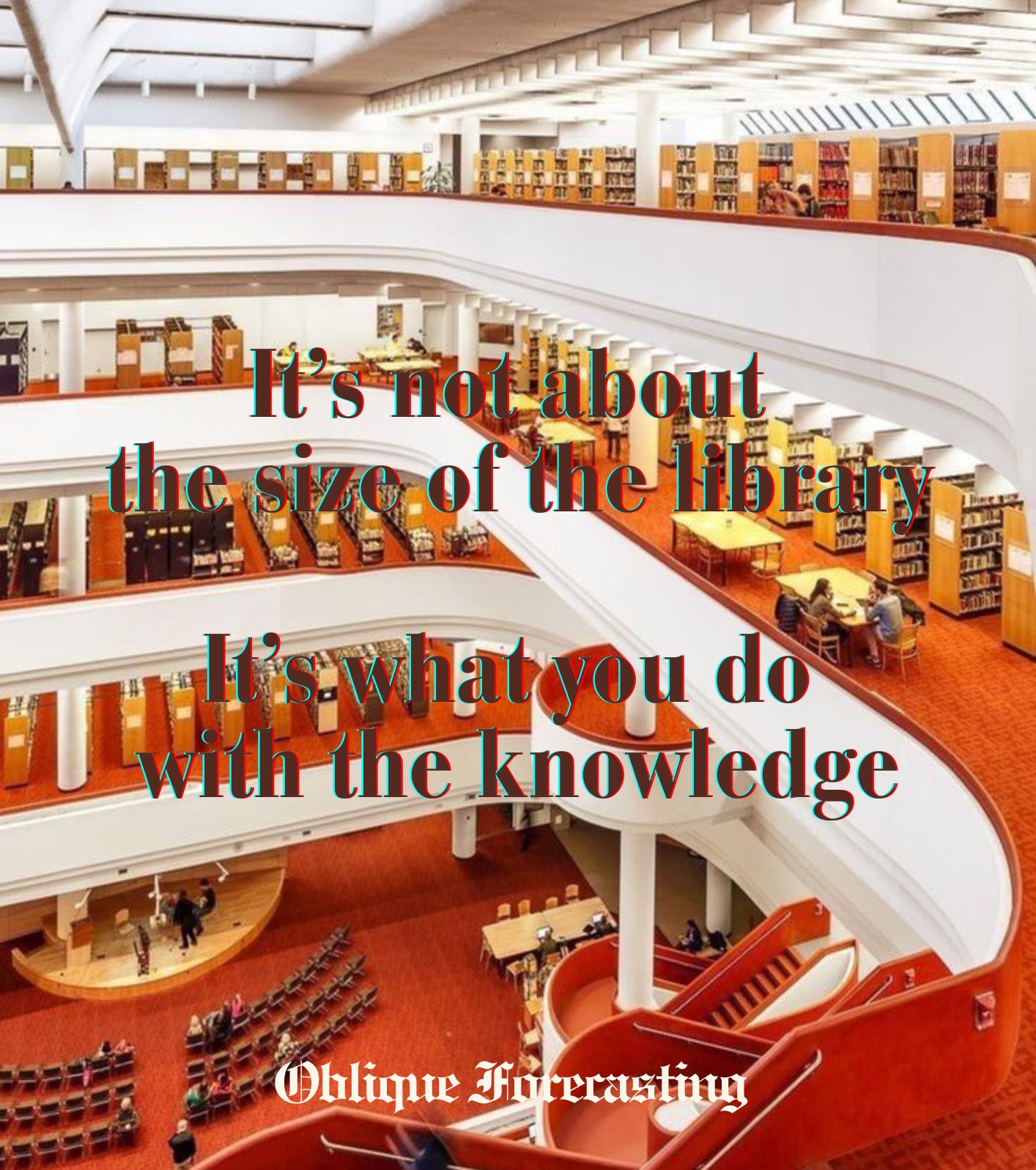
How lovely to see the Toronto Reference Library as the top image! I love that place. Work there all the time when I'm back in Canada 🇨🇦🇨🇦🇨🇦